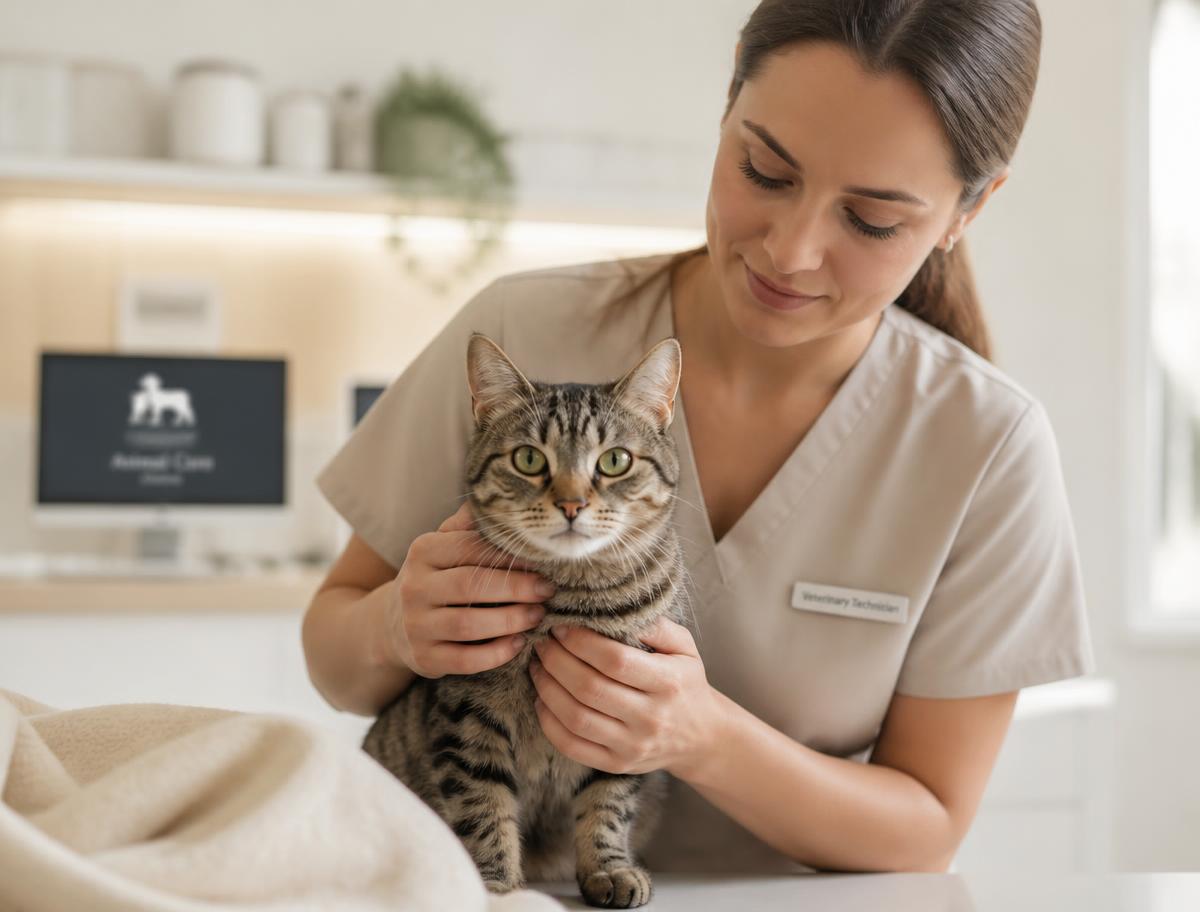
Fear Free methods are used for every patient at VetDERM Clinic, to help prevent fear, anxiety and stress from building over a long course of dermatology care.
Skin sampling alone can cause discomfort in allergic pets, and it is one of the most common procedures at VetDERM Clinic — along with ear flushes, injections, blood collection and more.
By using Fear Free practices we aim to make a positive impact on both the physical and emotional wellbeing of our patients and clients.
Procedures we plan around
Skin sampling and cytology
Ear flushes
Injections
Blood collection
Why it matters
Stress builds across long-term care.
Fear Free practices matter throughout veterinary medicine, and we believe especially in dermatology. Many dermatologic conditions mean long-term or lifelong therapy by pet owners with the help of veterinary professionals, and recurrent follow-ups are needed to diagnose some conditions through a process of elimination and to manage chronic skin and ear disease.
Without Fear Free practices, these visits and treatments at home can become increasingly difficult for pets, pet parents and veterinary staff. Escalating fear, anxiety and stress may lead to sedated examinations and a reduced ability to provide the best care, which in turn affects client compliance, trust and satisfaction.
Keeps repeat visits manageable
Supports compliance with treatment at home
Builds client trust and satisfaction
Helps avoid unnecessary sedated examinations
Pre-visit calming treatment
Some pre-visit calming options do not interfere with dermatology assessment or allergy testing, while tranquilizers need a washout period before intradermal testing. If the patient needs calming support for examination, please provide it to the client before the initial consultation — and call us if you are unsure what is suitable.
At VetDERM Clinic
Support that continues at home.
We provide support on how to mindfully desensitize and positively counter-condition treatments, to help prevent therapy from becoming harder over time. In our experience, Fear Free practices together with appropriate pre-visit calming support help prevent therapy problems.
For patients with established treatment aversions, we use training techniques such as counter-conditioning and desensitization to help them become more comfortable — and their owners more confident — with treatment.
Rescue & shelter
Working with rescue organizations.
Rescue and shelter animals often have complicated back stories. We work with organizations, fosters and family veterinarians to keep their care calm and consistent.