A patch of sore, damp skin can appear on a dog in a single afternoon, and by evening it has doubled. Hot spots move faster than almost anything else we see on skin. The good news is that they settle quickly with the right care, and the reason they started is usually findable.
Why they spread so quickly
A hot spot is a small area of skin that has become inflamed and uncomfortable, usually because the dog has been licking or chewing the same place. The licking makes the skin sorer, the soreness makes the dog lick more, and the patch widens from the middle outward. That loop is the whole reason a coin-sized spot in the morning can be palm-sized by bedtime.
Two things make it worse in a Vancouver or Surrey winter. The first is a coat that never fully dries — after a wet walk, a thick or double coat can hold moisture against the skin for hours. The second is that dogs do most of their licking in the evening, quietly, on a bed in another room, so nobody sees the first hour.
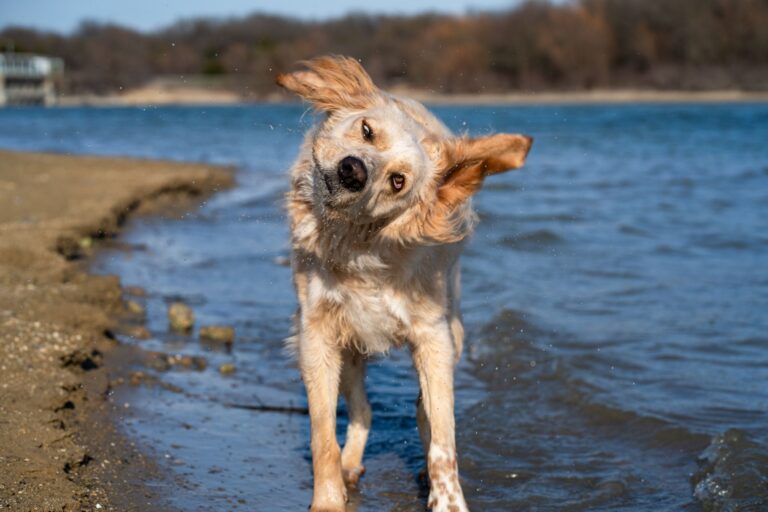
Thick-coated breeds feel this most. Retrievers, shepherds, collies and anything with a dense undercoat are the ones we see, and the spots turn up where moisture collects: under the ear, along the cheek and neck, at the base of the tail, and on the hips.
What to do in the first hour
- Stop the licking. This matters more than anything else you do. A soft recovery collar is not cruelty — it is the single thing that lets the skin settle.
- Trim the hair back from around the patch if you can do it calmly, so air reaches the skin. Blunt-ended scissors, and stop if your dog objects.
- Keep it dry. Pat the area dry after walks rather than leaving a damp coat over it.
- Leave your cupboard alone. Household antiseptics, essential oils and anything intended for people can make a sore patch considerably sorer.
- Photograph it with something for scale. A coin works. A spot that has grown overnight is a different conversation from one that has stayed put.
- Book a visit. These are uncomfortable, and they rarely resolve on their own while the dog can still reach them.
One thing worth knowing: a hot spot is almost always sore rather than merely itchy. A dog who normally loves having their neck scratched may flinch or turn their head away. That is not bad behaviour, and it is a reason to be gentle with the area rather than to keep examining it.
The part that gets missed
A single hot spot in a dog who has never had one before is often just bad luck: a wet weekend, a thick coat and an insect bite in the wrong place.
A dog who gets them repeatedly is telling you something else. Something started the licking, and until that is named, the patch comes back in the same place or a new one. The common drivers are an itch the dog already had — environmental or food-related — fleas, an ear that is bothering them, or soreness in a joint underneath the spot they keep going back to.
That last one surprises people. A dog licking repeatedly at one hip or one wrist is sometimes reacting to what is under the skin rather than on it.
This is where a dermatology work-up changes the answer. Our work on non-allergic skin and ear problems covers the sampling that shows what is actually growing on the surface, which is what tells us whether the spot is a simple one or part of a pattern. Where the itch came first, allergy testing is how we identify the driver rather than guess at it, and for dogs whose results point that way, allergy desensitization is the longer-term route. Most of our patients come through their own veterinarian, and our referral process sets out what we need and what your vet receives back.
Lowering the odds through the wet months
- Dry the coat properly after walks, especially the neck, the ear bases and the back end. A towel and five minutes is usually enough.
- Keep the parasite control going through winter. Fleas are active indoors here all year, and a single bite is enough to start the licking.
- Brush out a dense undercoat rather than letting it mat. Matted hair holds damp against the skin and hides the first day of a problem.
- Check the usual places weekly, with your hands rather than your eyes, under the collar and around the tail base.
- Take note of where they lick. The same spot twice is a pattern, not a coincidence.
Our hours and locations
Which day we can see you depends on which clinic is closer. Surrey, at 14823 108 Avenue, runs Monday, Tuesday, Thursday and Friday. Vancouver, at 15 East 3rd Avenue, runs Wednesday and Thursday. Each one opens at 8:00 am and closes at 4:30 pm, and neither opens Saturday or Sunday. Our phone line keeps the same weekday pattern.
Because we work by referral rather than as an emergency service, there will be times when we are not the right first call. A patch widening by the hour, a dog sore enough to object to being touched, or one who has gone quiet and off their food needs a same-day appointment with your own veterinarian, or an open emergency hospital if it is outside their hours too. Skin that is painful today should not wait for the next derm slot.
Common questions
How fast should I expect it to settle?
Comfort usually improves quickly once the licking stops and the skin can breathe. The hair takes longer and grows back last, which is normal and not a sign that something has gone wrong.
Can I just keep it covered?
Covering it traps moisture and warmth against exactly the skin that needs air. Stopping the licking is the useful intervention; wrapping it is not.
My dog gets one every autumn. Is that meaningful?
Yes, and it is worth investigating. A seasonal pattern points at something seasonal underneath, and that is a far more useful thing to know than the patch itself.
Do cats get hot spots?
Not in the same way. Cats are more likely to over-groom a wider area than to produce one angry patch, which is a different pattern with a different list behind it.
Should I bathe my dog when one appears?
Not without asking first. A general bath wets the whole coat including the sore area, which is the opposite of what it needs in the first day or two.
Speak to the team at VetDERM Clinic
If a patch has appeared this week, stop the licking today and book a visit. If this is the second or third one, bring the photographs and the dates — the pattern is what points us at the cause.
Published by the team at VetDERM Clinic.
This article is educational in nature and is not a replacement for hands-on assessment of your own pet by a veterinarian.
VetDERM Clinic
Vancouver: 15 East 3rd Avenue, Vancouver, BC V5T 1C5 (Wednesday and Thursday)
Surrey: 14823 108 Avenue, Surrey, BC V3R 1W2 (Monday, Tuesday, Thursday and Friday)
Phone: (604) 564-2214
Email: info@vetdermclinic.com
Hours: 8:00 am to 4:30 pm at both locations; closed Saturday and Sunday